
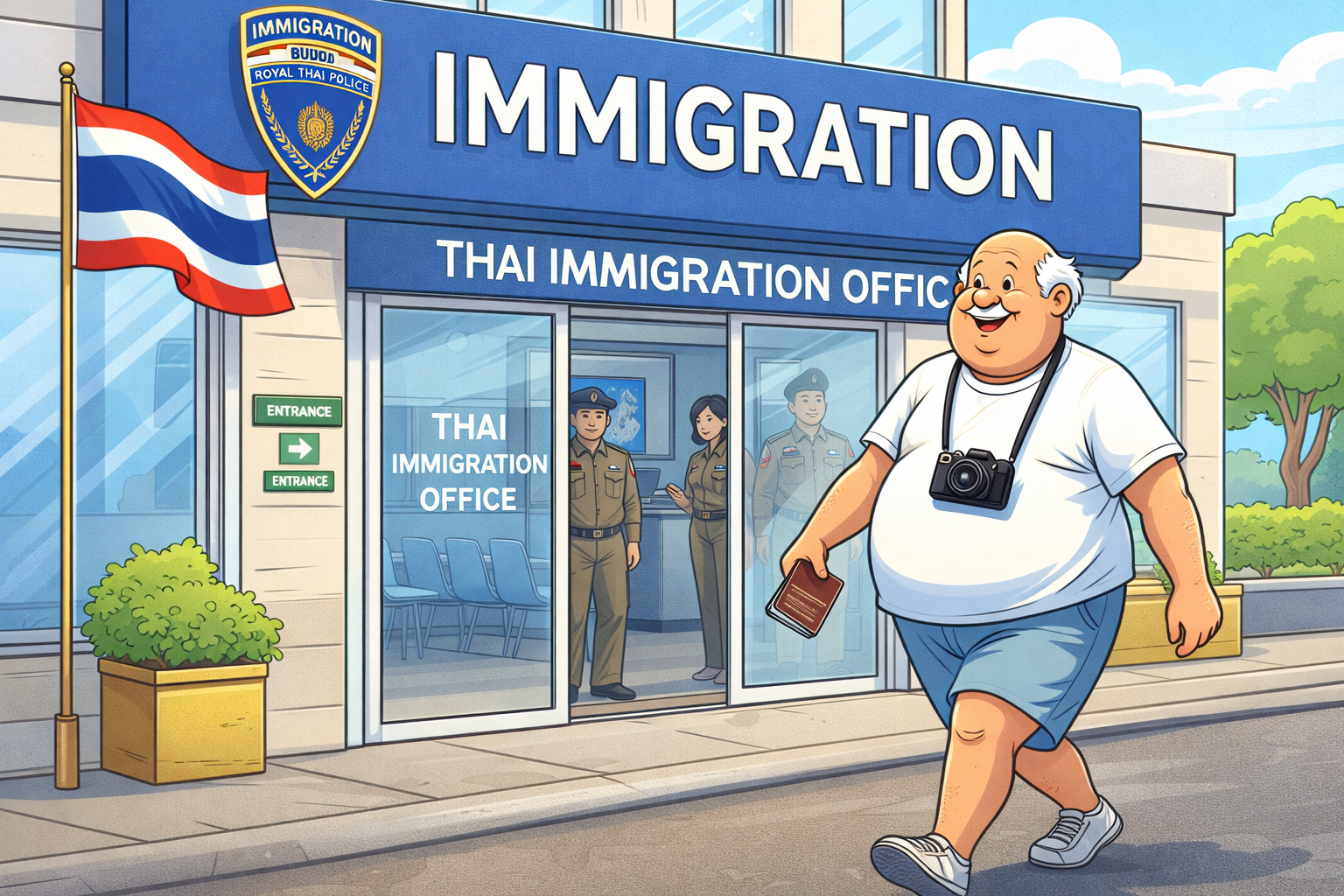
Quick answer: To qualify for a Thailand retirement visa in 2026, you must be at least 50 years old and meet one financial requirement — either 800,000 THB in a Thai bank, 65,000 THB monthly income, or a combination of both. Go through the details!
Thailand continues to attract retirees from around the world. Good healthcare, affordable living, and an easygoing lifestyle make it a natural choice. But staying long-term isn’t automatic. Once you turn 50, Thai Immigration allows you to stay on a retirement-based visa extension, provided you meet a few clear requirements.
This article explains Thailand retirement visa requirements for 2026 in plain language, based on official Thai government and immigration information, not visa agents or promotional websites.
What People Call a “Retirement Visa”
Thailand does not issue a permanent retirement visa.
What most people refer to as a retirement visa is actually a one-year extension of stay based on retirement. This extension is granted by Thai Immigration and can be renewed every year if you continue to qualify.
Most retirees apply after entering Thailand on a Non-Immigrant O visa or Non-Immigrant O-A visa.
Age Requirement (No Exceptions)
You must be 50 years old or older on the day you apply.
This rule is the same across Thailand and is enforced by every immigration office.
Official reference:
https://www.samutprakanimmigration.go.th/list-of-documents-for-retirement-visa/
Financial Requirements Explained Simply
Thai Immigration wants proof that you can support yourself without working. You only need to meet one of the options below, but the documents must be clear.
Option 1: Money in a Thai Bank
- 800,000 THB in a Thai bank account
- Funds must be in the account:
- At least 2 months before your first application
- At least 3 months before renewal
- After approval, part of the money must remain in the account
You will be asked for:
- A bank letter (usually issued the same day)
- An updated bank passbook
This is the most common and least complicated method.
Option 2: Monthly Income or Pension
- 65,000 THB per month
- Income must come from outside Thailand
- Proof must be acceptable to Thai Immigration
Some embassies still issue income confirmation letters. Others do not. In those cases, immigration may request bank transfers or official pension statements instead.
Option 3: Combination Method
- A mix of income and savings
- Total must equal 800,000 THB per year
This option is valid but often checked more carefully.
Official checklist reference:
https://www.samutprakanimmigration.go.th/list-of-documents-for-retirement-visa/
Documents You’ll Be Asked For
When applying at immigration, expect to prepare the following:
- TM.7 application form
- Passport and copies of relevant pages
- Valid Non-Immigrant visa
- Recent passport photo
- Bank letter and passbook (if using savings)
- Income proof (if using income or combination)
- Application fee (1,900 THB)
Some offices may request extra copies or local forms. This varies slightly by location.
Health Insurance: When It Is Required
Health insurance is required if you apply for a Non-Immigrant O-A visa outside Thailand.
The policy must:
- Cover inpatient and outpatient treatment
- Meet minimum coverage levels set by Thai authorities
- Be valid for the entire visa period
For retirement extensions applied inside Thailand, insurance is not always required, but some immigration offices now ask for it. Always check with your local office before applying.
Official reference:
https://www.longstay.tgia.org
Applying Inside Thailand vs Outside Thailand
Applying Inside Thailand
This is the route most retirees use.
Typical process:
- Enter Thailand on a Non-Immigrant O visa
- Open a Thai bank account
- Deposit funds and wait the required period
- Apply for the retirement extension at immigration
Applying Outside Thailand
If applying from abroad, you normally apply for a Non-Immigrant O-A visa.
This process usually requires:
- Police clearance
- Medical certificate
- Health insurance
- Financial proof
Applications from overseas are handled through Thailand’s official e-Visa system:
https://www.thaievisa.go.th/
Ongoing Rules After Approval
Once your retirement extension is granted, there are a few ongoing obligations.
90-Day Reporting
Every 90 days, you must report your current address to immigration. This can be done online or in person.
Official reference:
https://www.immigration.go.th/en?page_id=1666
Re-Entry Permit
If you leave Thailand without a re-entry permit, your retirement extension is cancelled automatically.
Annual Renewal
Your retirement extension must be renewed every year using updated financial and personal documents.
Official Sources Used
This article is based only on Thai government and immigration websites, including:
- Samut Prakan Immigration
https://www.samutprakanimmigration.go.th/list-of-documents-for-retirement-visa/ - Thailand Government Portal
https://thailand.go.th/public/visit-thailand-detail/010_003 - Thai Immigration Bureau
https://www.immigration.go.th/ - Thai e-Visa System
https://www.thaievisa.go.th/
Final Thoughts
Thailand’s retirement visa process is not difficult, but it is strict. Most problems happen because people misunderstand bank deposit timing, assume rules are flexible, or rely on outdated advice.
If you follow official guidance and prepare early, the process is usually smooth.
This guide will be kept updated on Thaibahts.org as immigration rules change, however, you are required to check with the immigration and official sources for accuracy.
Frequently Asked Questions
Can I work on a retirement visa in Thailand?
No. Employment of any kind is not permitted while staying in Thailand on a retirement-based visa extension.
How long is the Thailand retirement visa valid?
The retirement extension is valid for one year and must be renewed annually.
Do I need health insurance for a retirement visa?
Health insurance is required for Non-Immigrant O-A visas issued outside Thailand. Some immigration offices may also request insurance for extensions inside Thailand.
Can I leave Thailand during my retirement visa?
Yes, but you must obtain a re-entry permit before leaving, or your visa extension will be cancelled.
Can I switch to a retirement visa after entering Thailand?
Yes. Many retirees enter on a Non-Immigrant O visa and apply for the retirement extension inside Thailand.